Monday, 16 November 2026, story 4 of 4
Anthropic's Claude Fable 5.2 paints images with code, not diffusion
The model writes Python that places simulated brushstrokes, one scene using roughly 700,000. The demos come from Anthropic staff, and availability is not stated.
What happened
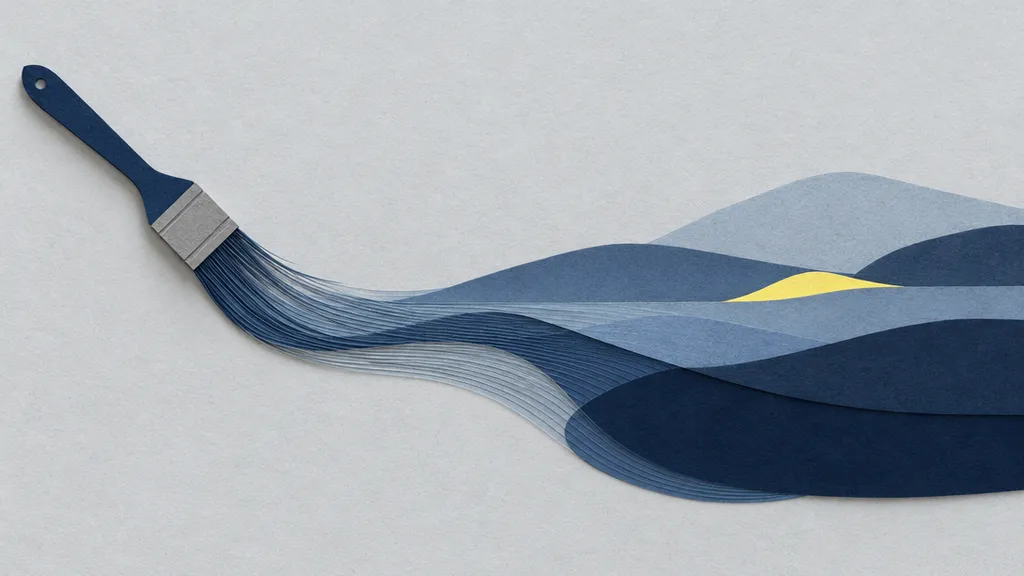
Anthropic's Claude Fable 5.2 makes images by writing Python that places simulated brushstrokes on a virtual canvas, The Decoder reports. Anthropic's Jake Eaton says the model uses no external image model and no traced source images. Each piece is a program of 1,000 to 2,000 lines. Eaton's parking garage scene took roughly 700,000 strokes. Anthropic's Michael Graczyk showed a bird painted in 111 strokes.
The source does not say whether Fable 5.2 is available or what it costs. Anthropic reports 64.9 percent on its internal RoboDojo Sim benchmark against 29.8 percent for OpenAI's GPT-6 Astra. In a robot-arm test by researcher Aris Zhu, Astra painted faster.
What it means
The notable part is the method: the image is a program, so every stroke is text a developer can read, edit or rerun. The model also looks at its canvas between passes and paints over its errors, a loop that resembles agentic tool use more than image generation.
The evidence is thin. The painting demos come from Anthropic employees, the benchmark is Anthropic's own, and the one outside test, Zhu's robot comparison, showed Astra faster and better at fine motor control. The source gives no cost or time per painting, so a 700,000-stroke job may be impractical for routine work. Access and independent replication are the things to watch.
What to do: Treat the demos as vendor-run until Anthropic states access and pricing; if you build agent loops, study the paint, look, correct pattern rather than waiting for the model.
Source
Filed under Models. Published .
"What it means" is analysis, not reporting. Found an error? Write to daily@vibitely.com.